
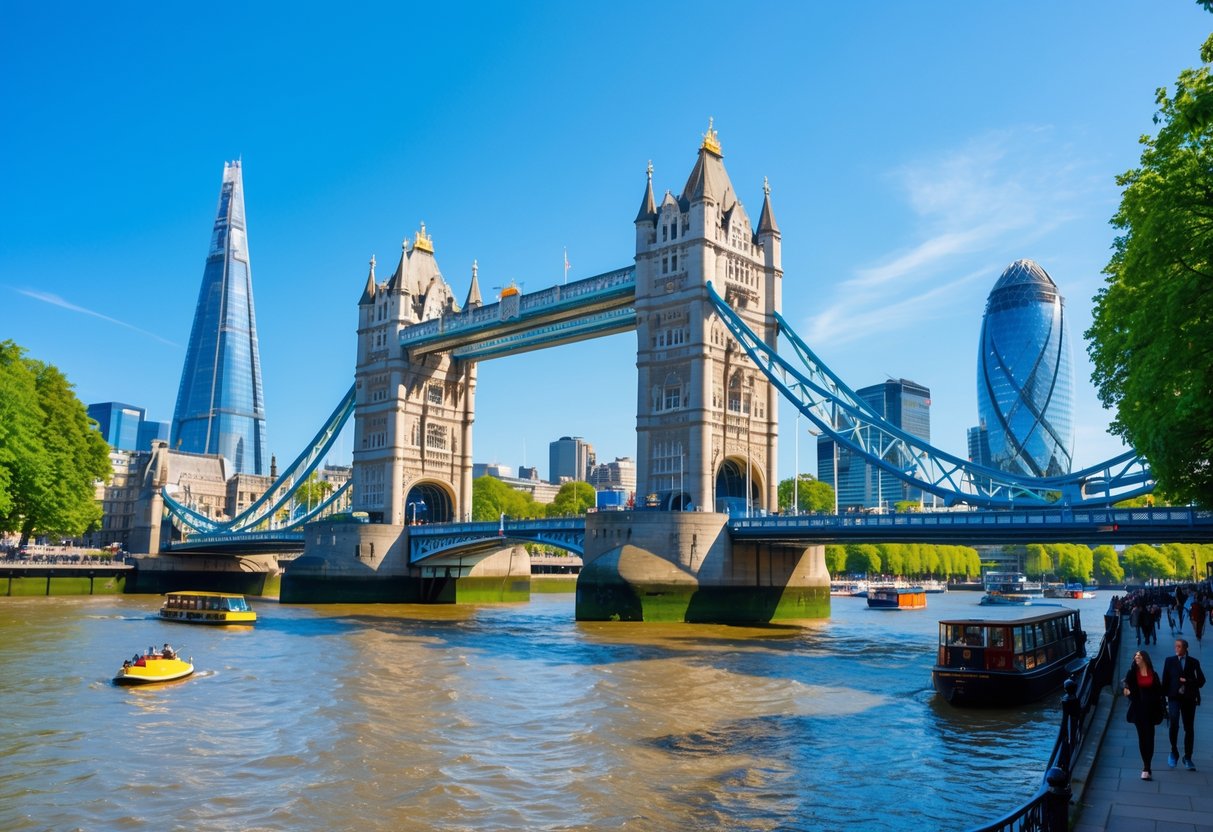
London draws millions every year, mixing up centuries-old landmarks, world-class museums, and neighborhoods that never sleep. If you’re heading to London, you’ll want to get a grip on the city’s transport, top sights, and a few practical hacks to squeeze the most out of your visit. From royal palaces and iconic towers to edgy art galleries and lively markets, it’s got a bit of everything.
Once you pick up the basics of the Tube, buses, and walkable routes, getting around London isn’t too complicated. Sure, the city’s huge, and it can feel overwhelming at first, but a little planning goes a long way. If you know what to expect with the weather and crowds, you’ll have a much better time.
This guide digs into planning your trip, highlights the must-see spots, and offers tips to dodge classic tourist pitfalls.
Key Takeaways
- Plan ahead for transport, hotels, and attraction tickets so you don’t waste time or overspend
- London’s top sights—palaces, museums, theater, and historic landmarks—are easy to reach by public transport
- You can save a ton with free attractions, passes, and clever booking strategies
How To Plan Your Trip To London

Planning a London trip means deciding when to go, how long to stay, where to sleep, and how to get around. Spring and fall? Great weather, thinner crowds. Three or four days? Just enough to hit the big stuff without sprinting through it all.
When To Visit London
Spring (late March to May) brings mild temps and blooming parks, and you won’t be elbowing as many tourists as in summer. It’s a good time to wander from Westminster Abbey to the Tower of London.
Summer (June to September) is packed. Expect long lines and higher hotel prices. If you’re set on seeing the big attractions, grab skip-the-line tickets early.
Fall (October and November) cools down, and the city’s parks are full of autumn color. Theater season kicks off in the West End, and the crowds thin out again.
Winter (December to February) means Christmas lights and markets everywhere. January and February have the cheapest hotels, but you’ll need layers and a raincoat—London’s famous for its drizzle.
The weather’s unpredictable, honestly. Pack a compact umbrella and dress in layers, no matter when you go.
How Many Days In London
If it’s your first time, you really want at least three full days to see the essentials without feeling rushed. That gives you time for the Tower of London, Westminster Abbey, Buckingham Palace, and a bit of wandering.
With only two days, you’ll have to skip a few museums and forget about day trips. It’s doable, but tight.
Four or five days? Now you can branch out—maybe a day trip to Stonehenge or Windsor, or just more time to soak up neighborhoods like Notting Hill or Shoreditch.
A full week lets you dig into London’s museums, markets, and food scene. You can fit in a couple of day trips, catch a show, and maybe even squeeze in afternoon tea.
Where To Stay In London
Westminster is ideal for first-timers—you’ll be steps from Big Ben, Westminster Abbey, and the Thames. It’s fancy, though, and pretty quiet at night.
South Kensington is great for families or museum lovers. You’ve got the Victoria and Albert and Natural History Museum right there. The vibe is more residential, with some solid restaurants.
Covent Garden puts you in the heart of the West End, near theaters, restaurants, and nightlife. Super central, but you’ll pay for the convenience.
Neighborhood Comparison:
| Area | Best For | Atmosphere |
|---|---|---|
| Westminster | First-timers, landmarks | Historic, quieter evenings |
| South Kensington | Families, museums | Residential, upscale |
| Covent Garden | Theater, dining | Lively, central |
| Tower Hill | History buffs | Riverside, budget-friendly |
Tower Hill’s a budget-friendly pick, especially if you want the Tower of London and riverside walks nearby. The Tube gets you everywhere else quickly.
Getting Around London
The Tube is your fastest bet for zipping around central London. Just tap in and out with a contactless card or your phone—no need for paper tickets.
Buses are cheaper than the Tube and run all night. The number 15 bus is a classic—it passes St. Paul’s Cathedral and Trafalgar Square.
Honestly, walking works well in the center. Lots of attractions are closer than you’d think. For example, you can stroll from Westminster to Tower Bridge in about 40 minutes along the Thames Path.
From Heathrow, the Elizabeth line gets you into central London in under half an hour for £12.80. The Heathrow Express is faster but way pricier. Taxis are comfy but expensive and slow if traffic’s bad.
Apps like Google Maps or Apple Maps help you navigate the Tube and buses in real time. And don’t forget—stand on the right on escalators so others can pass on the left.
Must-See London Attractions & Things To Do

London’s a jumble of history, museums, markets, and green spaces. You’ll find royal palaces, Gothic churches, and modern marvels all in the same city.
Iconic Landmarks In London
The Tower of London is a must for history buffs. You can check out the Crown Jewels, chat with the Beefeaters, and wander walls that have stood for nearly a thousand years. Give yourself a couple of hours here.
Westminster Abbey has hosted royal coronations for over a millennium. The Coronation Chair, in use since 1308, is there. It’s a bit surreal to walk through the same halls as kings and queens—and you’ll spot the graves of famous poets and scientists, too.
Buckingham Palace is still the King’s office. In summer, 19 State Rooms open to visitors. The Changing of the Guard happens out front—soldiers in those iconic uniforms swap shifts, and it’s free to watch if you get there early.
Big Ben is actually the bell inside the Elizabeth Tower, but everyone just calls the whole thing Big Ben. Those golden spires are unmistakable along the Thames.
The London Eye gives you a half-hour spin above the skyline, with killer views of St. Paul’s and the Thames. Tower Bridge has glass floors 42 meters up and Victorian engine rooms you can poke around in.
Notable Museums And Cultural Sites
The British Museum is huge—over eight million objects from all over the globe. It’s free to enter, but book a timed slot online if you can. Don’t miss the Rosetta Stone, Egyptian mummies, or the Parthenon marbles. Two or three hours barely scratches the surface.
The Natural History Museum is a hit with families and science nerds. Dinosaurs, gems, and all sorts of creatures fill the halls. Like most big London museums, it’s free to get in.
St. Paul’s Cathedral is stunning, inside and out. Climb up to the Golden Gallery for panoramic views, and try the Whispering Gallery—your voice carries all the way across the dome.
Tate Modern shows off contemporary art in a massive old power station. Shakespeare’s Globe is a faithful recreation of the playwright’s original theater. The Churchill War Rooms let you step into the secret bunker where WWII decisions were made.
The Royal Observatory in Greenwich is where you can straddle the Prime Meridian Line—one foot in each hemisphere. Kind of a fun photo op.
Popular Markets, Parks & Neighbourhoods
Borough Market is a foodie’s dream. You’ll find fresh produce, baked goods, and street eats from around the world. It’s open most days, but weekends are the busiest.
Camden Market is the place for alternative fashion, vintage finds, crafts, and street food. The area’s a maze of market stalls and quirky shops. Covent Garden mixes shopping, street performers, and restaurants in old covered markets and on the surrounding streets.
Oxford Street is London’s main drag for shopping—over a mile of department stores and big chains. Trafalgar Square is home to Nelson’s Column, those big lion statues, and the National Gallery right on the north side.
Hyde Park covers 350 acres—plenty of space for a stroll, a picnic, or a paddle on the Serpentine lake. Kensington Palace sits on the west end. In summer, you’ll catch concerts and plenty of sunbathers.
Piccadilly Circus is where the famous neon signs light up the night. It’s always buzzing, day or night.
Day Trips From London
Windsor Castle is about 40 minutes away by train. When the royals aren’t in, you can tour the State Apartments and St. George’s Chapel—there’s a lot of history packed in here.
Stonehenge is a 90-minute trip. Those ancient stone circles are as mysterious as ever. Most people go with a guided tour that covers transport and entry.
Bath is famous for its Roman baths and Georgian buildings. It’s about two hours by train. The Roman bath complex and Bath Abbey are the highlights.
Oxford and Cambridge both have gorgeous old college buildings and libraries. Each is about an hour away. Walking tours show off the academic history and beautiful courtyards.
Brighton gives you classic British seaside vibes—pebble beach, a historic pier, and the wild-looking Royal Pavilion. Just an hour south by train.
Frequently Asked Questions
People planning a London trip usually wonder about visas, the best time to go, top attractions, getting around, budgets, and local quirks. Knowing the basics makes everything smoother once you land.
What are the visa requirements for visiting London?
From January 8, 2025, travelers from certain visa-exempt countries—including the US, Canada, Australia, Japan, and EU nations—need an Electronic Travel Authorisation (ETA) before flying to London.
You should apply for the ETA online ahead of your trip. It’s a pretty straightforward process, but don’t leave it to the last minute.
Depending on your nationality, you might still need a traditional visa instead of an ETA. It’s best to check the UK government’s official site for the latest info for your country.
What is the best time of year to visit London?
April to June is a sweet spot—mild weather, blooming parks, and fewer crowds. London’s gardens really shine, and sightseeing is more relaxed.
September and October are also good, with pleasant weather and lighter crowds than summer. It’s easier to get into popular spots without waiting forever.
Honestly, London’s great year-round. Museums and theaters are always open, and winter brings Christmas markets and festive lights. Summer has long days and outdoor events, but it’s busier and pricier.
What are the top tourist attractions to see in London?
The Tower of London is one of the city’s oldest landmarks, originally set up by the Romans back in AD50. Tower Bridge and St Paul’s Cathedral also make the list of must-see spots in the historic City of London area.
London’s royal palaces pull in millions of visitors every year. You can check out world-class museums for free—at least for their main collections—which is a huge plus if you’re traveling on a budget.
The West End theater district puts on loads of award-winning shows and musicals. Parks and gardens give the city a surprising amount of green space, while buildings like The Gherkin and The Shard bring a modern edge to London’s skyline.
How can I travel around London using public transportation?
The Tube (London Underground) runs through most of the city and is usually the fastest way to get around. Buses, riverboats, local trains, and the Santander Cycles bike hire scheme all give you other ways to move about, depending on your mood or the weather.
Just grab an Oyster card—it makes paying for any public transport a breeze and usually ends up cheaper than buying single tickets every time.
Most stations and buses now let you tap in with a contactless payment card instead of Oyster if that’s easier. You can find travel maps and guides online or at stations, so planning your route isn’t too much of a headache.
What are some tips for budget-friendly travel in London?
London has loads of free attractions, especially museums and art galleries where you don’t have to pay for the main exhibits. Parks and gardens are open to everyone and make great spots to relax or wander.
Plenty of restaurants serve affordable meals, and street food markets are everywhere—honestly, some of the best food comes from those stalls, and it’s way cheaper than most sit-down places. You’ll find budget accommodation in different neighborhoods, though prices can still surprise you sometimes.
Skip the taxis and use public transport to save cash. Walking between attractions (if they’re close) doesn’t cost a thing, and you end up discovering corners of the city you might otherwise miss.
What should I know about cultural etiquette when visiting London?
In London restaurants, people usually tip around 10 to 15% if the bill doesn’t already include service. Quite a few places just tack on a 12.5% service charge, so check your bill before adding more.
When you take a black cab or a licensed minicab, most folks just round up the fare to the next pound. Hotel porters generally appreciate a small tip for helping with your bags.
Londoners really care about queuing (standing in line). They expect you to wait your turn, and honestly, skipping ahead won’t win you any friends. Oh, and the tap water? Totally safe—some even say it’s among the best out there.
Comments