
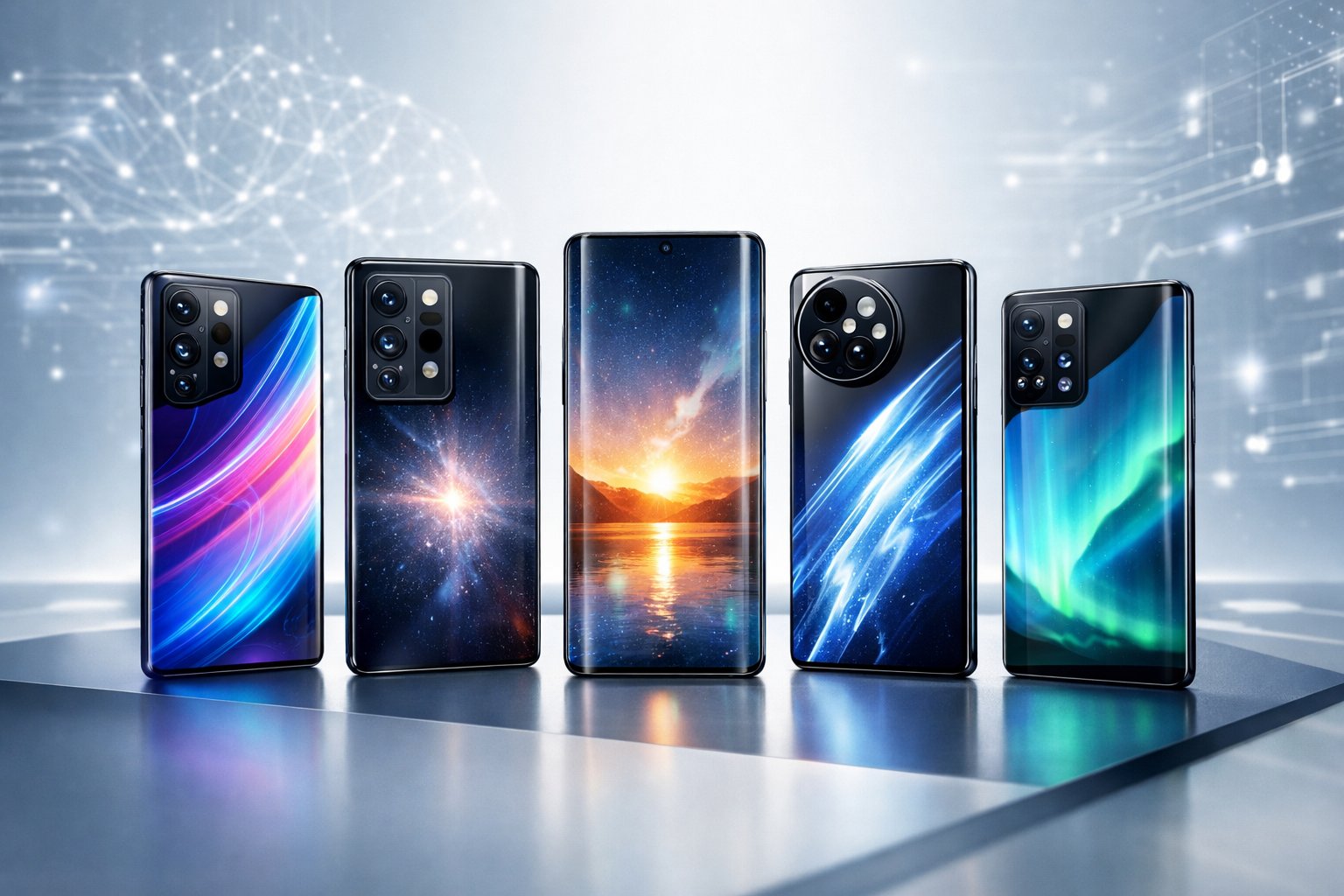
The smartphone world’s about to get a whole lot more interesting. 2026 looks packed with big releases across all price ranges, with Apple, Samsung, and Google rolling out their latest flagships—think better cameras, faster chips, and smarter AI. If you’re eyeing a new phone this year, you might want to know what’s just around the corner.
Big changes start as early as January and keep coming through September. Some phones will push photography with wild 200-megapixel cameras. Others get new looks or better batteries. A few might even shake up their usual release patterns.
This guide highlights five smartphones you should really keep an eye on in 2026. Each one brings something unique, whether you’re chasing the best camera, top performance, or just want to be first with the latest tech.
Key Takeaways
- Major smartphone launches in 2026 stretch from January to September, starring all the big brands
- Expect 200-megapixel cameras, next-gen chips, and smarter AI in new models
- Flagships from Apple, Samsung, and Google headline the year with standout upgrades
Top 5 Smartphones to Watch Out in 2026

Big smartphone makers are lining up their flagship launches for 2026, promising better chips, sharper cameras, and smarter AI. Apple’s iPhone 18 series might ditch the standard model, Samsung’s Galaxy S26 lineup is all about camera upgrades and new chipsets, Google’s Pixel 11 series leans into computational photography, Realme’s mid-rangers hit early in January, and brands like OnePlus and Xiaomi keep pushing boundaries for flagships.
Apple iPhone 18 Series: Innovations and Expected Upgrades
The iPhone 18 series marks a real change in Apple’s playbook. There’s no standard iPhone 18 this year—just the iPhone 18 Pro, iPhone 18 Pro Max, and a new iPhone Air successor.
Apple plans to launch these in September 2026, likely powered by the A20 Bionic chip for faster performance and better on-device AI. Cameras will get upgrades across the board, though Apple’s keeping details close to the chest for now.
The biggest shakeup? Apple’s dropping the base model, moving away from the usual four-phone lineup. The Air successor probably fills that gap, maybe with a slimmer design and a more wallet-friendly price.
Some rumors say Apple might finally introduce a book-style foldable iPhone, but it’s still unclear if that’ll join the iPhone 18 series or show up as something separate. The Pro and Pro Max go after folks who want every top feature Apple can cram in.
Samsung Galaxy S26 Series: Flagship Features and Enhancements
Samsung’s Galaxy S26 series should drop in February 2026. Expect three models: the Galaxy S26, Galaxy S26+, and Galaxy S26 Ultra. Samsung originally wanted to add Edge and Pro models, but those got axed after the S25 Edge didn’t sell well.
The Galaxy S26 Ultra brings a 200-megapixel main sensor, promising crazy detail and solid low-light shots. Samsung’s really leaning into camera improvements and AI smarts across the lineup.
Performance depends on where you live:
- Snapdragon 8 Elite Gen 5 for most markets
- Exynos 2600 in some regions
The Galaxy S26 lineup shows Samsung isn’t letting up in the flagship race. You’ll get faster chips, better battery life, and AI features that actually help with daily stuff. The Ultra’s still the one for spec junkies who want it all.
Google Pixel 11 Series: AI and Computational Photography Highlights
The Google Pixel 11 series should arrive in August 2026. Expect the Pixel 11, Pixel 11 Pro, and Pixel 11 Pro XL, and maybe a new Pixel Fold too.
Google’s powering these with a next-gen Tensor chip and a new MediaTek modem for better speed and connectivity. The Pixel 11 line keeps pushing advanced AI and computational photography—Google’s calling cards by now.
Google’s AI-driven camera processing goes beyond hardware specs. Their computational photography uses AI to make photos look better in ways megapixels alone can’t. With Google building both hardware and software, the Pixel 11 series promises tighter Android integration.
This new Tensor chip should boost on-device AI—think faster voice typing, real-time translation, and photo editing, all without needing the cloud. Details are still light, but the Pro and Pro XL will aim for users who want the very best camera Google can deliver.
Realme 16 Pro Series 5G: Early 2026 Mid-Range Game-Changer
The Realme 16 Pro Series 5G drops on January 6, 2026, making it one of the year’s first new phones. You get two models: Realme 16 Pro 5G and Realme 16 Pro+ 5G.
Both pack a 200-megapixel main camera. The Pro+ adds a 50-megapixel periscope telephoto for better zoom. Japanese designer Naoto Fukasawa worked on the look, so expect a fresh vibe this time.
Chipset upgrades should give you smoother performance over last year’s models. Early teasers hint at design tweaks that set these apart from the Realme 15 series. With an India launch, expect aggressive pricing for the mid-range crowd.
Realme’s aiming this series at people who want flagship-level cameras without flagship price tags. That 200-megapixel sensor puts these phones up against premium devices that usually cost a lot more.
Other Notable Contenders: OnePlus 15, Xiaomi 16 Ultra, and More
There are a few more phones worth mentioning in 2026. OnePlus 15 keeps up the brand’s tradition of flagship specs at solid prices. You’ll see top performance and super-fast charging that cuts down waiting time.
The Xiaomi 16 Ultra pushes camera tech even further. Xiaomi’s Ultra models usually pack imaging hardware that rivals or beats the competition. The Vivo X300 Pro and Oppo Find X9 Pro are strong picks in places where those brands have a following.
The Redmi Note 15 5G lands on January 6, 2026, right alongside the Realme 16 Pro series. It runs the Snapdragon 6 Gen 3, promising a 30% CPU boost and 48 months of lag-free use.
The Oppo Reno 15 series comes out around January 8, 2026. These feature HoloFusion Tech and aerospace-grade aluminum frames. The lineup includes the Reno 15, 15 Pro, and a new Pro mini focused on design and AI-powered photography.
Key Trends in 2026 Smartphones: Features, AI, and Camera Technology

In 2026, three things really define smartphones: smarter AI that runs right on your device, high-res camera systems with better zoom, and displays that keep getting better—whether flat or foldable.
Enhanced AI Capabilities and On-Device Intelligence
AI in 2026 phones works right on your device, not just in the cloud. The iPhone 18 series uses the A20 Bionic chip to handle AI tasks locally, so your info stays on your phone. Samsung’s Galaxy S26 lineup uses the Snapdragon 8 Elite Gen 5, which speeds up AI for everyday stuff.
These AI upgrades actually make your phone more useful—smarter photo editing, better battery life, and sharper voice recognition. Google’s Pixel 11 series comes with a new Tensor chip, built just for AI workloads.
With on-device smarts, your phone reacts faster. Redmi Note 15 5G’s Snapdragon 6 Gen 3 gives you 30% better CPU performance and up to 48 months of smooth use.
AI-powered photography is now standard on flagships. Your camera auto-adjusts settings for your scene, recognizes what you’re shooting, and processes images with more detail and color accuracy.
Next-Generation Camera Systems and Imaging Advances
Camera tech in 2026 jumps ahead with bigger megapixel counts and better zoom. The Realme 16 Pro Series rocks a 200-megapixel main camera for super-detailed shots. Samsung’s Galaxy S26 Ultra matches that with its own 200-megapixel sensor.
Telephoto zoom gets a big boost. The Realme 16 Pro+ adds a 50-megapixel periscope telephoto for long-range photos. This tech lets you snap far-off subjects without losing quality.
Flagships now include better ultrawide cameras, capturing more light and detail in wide shots. Computational photography combines multiple exposures for better images in tricky lighting.
Oppo Reno 15 series brings in HoloFusion Tech for smarter image processing. That, plus the aerospace-grade aluminum frame, helps cut down camera shake and makes photos steadier. Camera phones in 2026 balance hardware upgrades with smart software to give you pro-level results.
Display, Design, and Foldable Innovations
Displays in 2026 focus on smoother refresh rates and using less power. LTPO AMOLED screens adjust their refresh rate based on what you’re doing, saving battery while keeping things smooth. High-res AMOLEDs make text and colors pop.
Some phones could hit 240Hz refresh rates—rumors say gaming and scrolling will feel even slicker.
Designs get tougher and better looking. Oppo Reno 15 uses aerospace-grade aluminum for more durability. Realme 16 Pro Series, with Naoto Fukasawa’s touch, brings a new design language.
Apple might finally hide Face ID under the display in the iPhone 18 series, clearing up the front for a cleaner look. Every flagship keeps 5G as a given, so you’re set for fast networks no matter the price tier.
Frequently Asked Questions
The 2026 smartphone market brings up questions about new battery tech, AI chips, camera systems, and how pricing shakes out across brands.
What are the major technological advancements in 2026’s top smartphones?
Silicon-carbon batteries are the biggest leap for 2026 phones. These deliver 30-50% higher energy density than old-school lithium-ion, letting brands pack 6,000mAh batteries into phones that still weigh under 200g.
Next up, 3nm AI chipsets. Qualcomm’s Snapdragon 8 Elite Gen 5, Google’s Tensor G5, and Apple’s A20 Bionic all use 3nm tech, making it possible to run AI right on your phone—no internet needed.
The third big thing? Computational photography with larger sensors. Some phones now use 1-inch sensors, matching pro compact cameras. These capture 14-bit RAW with over 13 stops of dynamic range.
Which smartphones released in 2026 offer the best battery life?
Chinese brands really took the lead in battery capacity this year. OnePlus 15 packs a 6,000mAh silicon-carbon battery into a phone that somehow stays under 200g—kind of wild, honestly. Honor’s Magic V5 foldable manages to squeeze a 5,820mAh battery into a chassis just 5.2mm thick when you unfold it. That’s impressive engineering.
Google’s Pixel 10 Pro XL hits about 12 hours of screen-on time with its 4,870mAh battery, but that’s not quite enough to beat the bigger batteries out there. Samsung stuck with a 5,000mAh cell in the Galaxy S26 Ultra and gets 10-11 hours thanks to software tweaks more than anything else.
Apple’s iPhone 18 Pro Max probably lands somewhere around 4,800 to 4,900mAh. They’re still betting on iOS efficiency rather than cramming in a huge battery. Meanwhile, Xiaomi and other Chinese brands keep pushing 6,000-7,000mAh batteries using that new silicon-carbon stuff.
What new camera features set apart the leading smartphones of 2026?
Apparently, the Xiaomi 17 Ultra has the first 1-inch mobile camera sensor, which is pretty huge for a phone. Bigger sensor means more light, so you get better shots in the dark. There’s also a 200MP periscope telephoto with continuous optical zoom from 3.5x up to 10x—no awkward jumps between lenses.
Samsung’s Galaxy S26 Ultra comes with a 200MP main sensor using nonacell pixel binning. Basically, it combines nine tiny pixels into one bigger one, so low-light shots look cleaner. You get both 5x and 3x optical telephoto lenses—handy for different situations.
Google’s Pixel 10 Pro XL leans into computational photography instead of chasing hardware specs. The triple 50MP camera setup relies on AI to pull out detail at high zoom. Their Tensor G5 chip processes images right on the phone, no cloud needed.
How have the top smartphones of 2026 improved in terms of processing power and speed?
With 3nm chips, phones now run about 30% faster and use 20% less power than those old 5nm ones. Samsung’s Galaxy S26 Ultra ships with 16GB RAM for everyone now, not just certain regions. You can juggle multiple desktop sessions and a ton of browser tabs without things slowing to a crawl.
Google switched the Tensor G5 from Samsung to TSMC for manufacturing, and now it runs massive language models right on your device. Apple’s A20 Bionic moves to a 2nm process, which brings another 20% performance jump and 30% better power efficiency.
Qualcomm’s Snapdragon 8 Elite Gen 5 in the S26 Ultra clocks 100MHz higher than the regular one. It handles 8K video rendering and heavy games at native resolution. GPU performance across all the 2026 flagships got a solid 30% bump.
Which smartphones of 2026 are considered the best for professional use?
Samsung’s Galaxy S26 Ultra aims straight at business users with its built-in S Pen stylus. You get 4,096 pressure levels and under 10ms latency, so writing feels natural. DeX wireless support lets you hook up to displays without cables for a desktop-like experience.
Google’s Pixel 10 Pro XL appeals to developers and creatives. It promises seven years of OS updates and security patches. The AI features offer real-time photo guidance and even contextual help during calls, which is honestly pretty handy.
Apple’s iPhone 18 Pro Max fits best for enterprise folks already in the Apple ecosystem. You get strong security, long-term software support, and Mobile Device Management. Features like Universal Clipboard and Continuity Camera work seamlessly with your iPad, Mac, and other Apple gear.
What are the price ranges for the most competitive smartphones released in 2026?
Flagship smartphones in 2026 run between $1,099 and $1,299 for base storage. The Google Pixel 10 Pro XL kicks off at $1,199 for 256GB. Samsung’s Galaxy S26 Ultra asks $1,299 for 256GB, which makes sense considering its S Pen and 16GB RAM.
Apple’s iPhone 18 Pro Max lands at $1,199 for 256GB—basically right in line with Google’s price but still a bit under Samsung’s. Xiaomi’s 17 Ultra feels like the bargain here, sitting at $1,099 for 256GB, and somehow still packs one of the most advanced camera systems out there.
If you’re looking at mid-range, brands like Motorola start around $799 for 256GB. These models deliver a clean Android experience, but let’s be honest—they miss out on those extra features you get with the pricier flagships. You end up paying more for things like S Pen support, next-level AI, and those pro camera setups.
Comments