
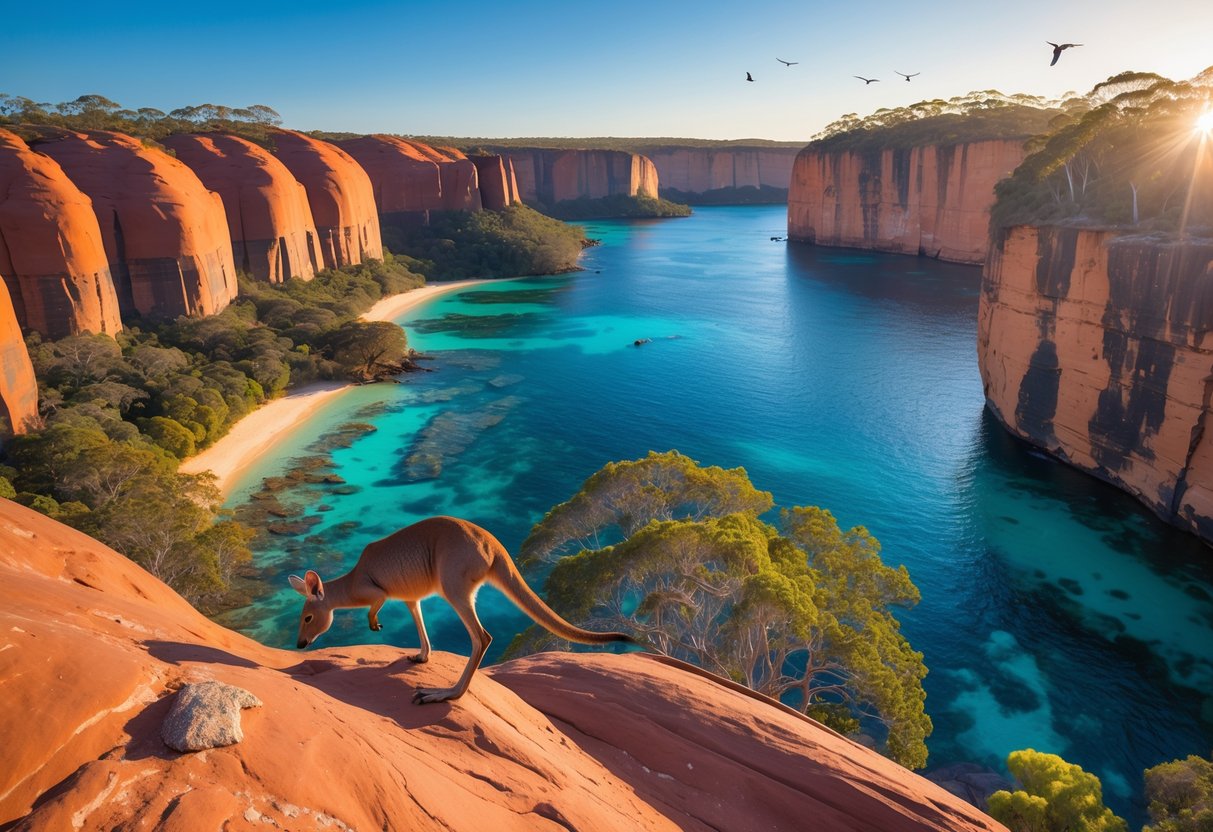
Australia packs a wild punch when it comes to natural and cultural attractions—no wonder millions of visitors flock here every year. From the dazzling blues of the Great Barrier Reef to the ancient, sunburnt heart of Uluru, this continent’s variety is honestly staggering. People often point to seven wonders: the Great Barrier Reef, Uluru and Kata Tjuta, the Twelve Apostles, Ningaloo Reef, the Three Sisters, the Southern Lights, and Mitchell Falls.

These places really show off Australia’s wild geology, rare wildlife, and deep Aboriginal roots. Whether you’re swimming with whale sharks, chasing the Southern Lights in Tasmania, or poking around ancient caves, every spot has its own flavor.
Most travelers start their journeys from major cities, but you can pick from all sorts of tours and routes. Some of these wonders sit right on the edge of civilization, while others hide deep in the bush. A lot of these places hold spiritual meaning for Aboriginal people and tell stories millions of years in the making. It’s a choose-your-own-adventure kind of country—go as wild or as cushy as you want.
Key Takeaways
- Australia’s seven big wonders cover everything from coral reefs to glowing skies to ancient rock towers
- These spots blend jaw-dropping scenery with Aboriginal culture and deep geological history
- Travelers can pick how they explore—there are options for every comfort zone and curiosity
Australia’s Most Iconic Wonders

When most people think of Australia, they picture the underwater magic of the Great Barrier Reef, the rusty giants of Uluru and Kata Tjuta, and the Sydney Opera House—those white sails standing proud over the harbor. These UNESCO World Heritage sites mix natural drama with human ambition.
Great Barrier Reef: The World’s Largest Coral Reef
The Great Barrier Reef snakes over 1,400 miles along Queensland’s coast. It’s not just a UNESCO site—it’s a living, breathing world of 2,500 reefs and 900 islands.
Dive in and you’ll see six species of sea turtles, more than 1,500 types of fish, and 400 kinds of coral. Humpback whales, dolphins, and dugongs cruise these waters too.
Popular Activities:
- Snorkeling and scuba diving
- Glass-bottom boat tours
- Helicopter rides
- Island hopping
Climate change and coral bleaching threaten the reef, but people are working hard to protect it for the future.
Most folks reach the reef from Cairns, Port Douglas, or the Whitsundays. It’s so big you can spot it from space—how wild is that?
Uluru and Kata Tjuta: Sacred Monoliths of the Outback
Uluru (Ayers Rock) towers 1,148 feet above the red sands of the Northern Territory. Right at Australia’s core, this sandstone giant means everything to the Anangu people.
Watch as the rock shifts colors with the sun—sunrise and sunset are especially wild, with shades from deep purple to fiery red and orange.
Kata Tjuta sits about 25 miles west of Uluru. Thirty-six dome-shaped rocks spread across 12 miles of desert. Both places are sacred, and Aboriginal people have cared for them for over 65,000 years.
Uluru-Kata Tjuta National Park protects these formations. You’ll find ancient Aboriginal rock art here, some more than 40,000 years old.
You can walk around Uluru’s base or hike through Kata Tjuta’s Valley of the Winds. Out of respect for the land and its people, climbing Uluru isn’t allowed anymore—and honestly, that feels right.
Sydney Opera House and Sydney Harbour: Architectural Landmarks
The Sydney Opera House is probably Australia’s most famous building. Its white, sail-like roofs rise from the harbor, catching the eye from every angle.
They finished building it in 1973, anchoring it on 588 concrete pillars sunk 82 feet into the ground. Inside, you’ll find several venues for concerts, theater, and all sorts of performances.
Sydney Harbour is the perfect stage for this icon, stretching 21 square miles with more than 150 miles of shoreline.
The Sydney Harbour Bridge stands tall beside the Opera House, and together, they create one of the most photogenic skylines anywhere.
Take a guided tour inside, catch a show, or if you’re feeling brave, climb the shells for unreal harbor views. Ferries give you the best photo ops, hands down.
Don’t skip the Royal Botanic Gardens or Circular Quay nearby—they round out the Sydney Harbour experience with a mix of nature, history, and city buzz.
Diverse Natural and Cultural Marvels
Australia’s wild places stretch from the limestone cliffs of Victoria to the tangled rainforests of Queensland, the rugged wilds of Tasmania, and far-off islands. Each landscape has its own story—rare creatures, ancient Aboriginal culture, or rock formations that have seen more years than you can wrap your head around.
Twelve Apostles and the Great Ocean Road: Coastal Sculptures
The Twelve Apostles are limestone stacks that shoot up from the Southern Ocean along Victoria’s coast. Some of these towers reach 70 meters high, and they’re always changing shape as the waves chip away at them.
The Great Ocean Road runs 243 kilometers from Melbourne toward South Australia, hugging the coastline the whole way. You’ll pass cliffs, hidden beaches, and thick forests.
Keep your eyes peeled for koalas, echidnas, and all sorts of birds. The road links up with small towns where you’ll find cozy cafes and art spots.
Key viewing points:
- Gibson Steps for getting down to the beach
- Twelve Apostles Visitor Centre
- Loch Ard Gorge, with its shipwreck tales
- London Bridge rock formation
Those cliffs started forming over 20 million years ago from layers of marine sediment. Over time, the ocean carved out the stacks, leaving them standing apart from the mainland.
Kakadu National Park and Daintree Rainforest: Rich Ecosystems
Kakadu National Park sprawls across 19,804 square kilometers in the north. Wetlands, rivers, and escarpments here shelter saltwater crocs, water buffalo, and over 280 bird species.
You’ll find Aboriginal rock art sites that go back 65,000 years. The paintings show everything from hunting scenes to creation stories.
The Daintree Rainforest in Queensland is the oldest rainforest on Earth—180 million years old, if you can believe it. It covers 1,200 square kilometers and holds plants you won’t see anywhere else.
Snorkel in nearby reefs or cruise the rivers looking for crocodiles. The forest canopy gets so thick—up to 40 meters high—that the ground below barely sees sunlight.
Some unique species:
- Cassowaries, those giant birds weighing up to 60 kg
- Boyd’s forest dragon lizards
- Ulysses butterflies with electric blue wings
- Ancient ferns
K’gari, Tasmania & Remote Wilderness: Islands, Mountains and Rainforests
K’gari (formerly Fraser Island) is the world’s largest sand island, stretching 1,840 square kilometers. It’s got over 100 freshwater lakes—Lake McKenzie’s white sand is unreal.
Dingoes wander the island, and the forests grow straight out of the sand, no soil needed.
Tasmania boasts dramatic mountains, cool rainforests, and wildlife you won’t find anywhere else. In Cradle Mountain-Lake St Clair National Park, you’ll see Huon pines older than 2,000 years.
Western Australia’s Kimberley region covers a jaw-dropping 423,517 square kilometers of untouched wilderness. You’ll find ancient rocks, deep gorges, and Aboriginal art that’s been around for 40,000 years.
During the wet season (December to March), waterfalls thunder down cliffs. The place is so remote, most of the ecosystem has barely changed at all.
Frequently Asked Questions
Australia’s natural beauty is honestly hard to sum up—ancient rocks, coral reefs, quirky marsupials, and Aboriginal sites that go way back. You get both wild landscapes and modern city icons, and you can explore them all if you’re up for it.
What are the top natural landmarks to visit in Australia?
Uluru is probably the country’s most famous natural landmark. This sandstone monolith rises 1,148 feet above the desert in the Northern Territory.
The Great Barrier Reef runs over 1,200 miles along the northeast coast, with 2,500 reefs and 800 islands.
The Twelve Apostles are limestone pillars standing 150 feet above the Southern Ocean. Only eight are left these days, but they’re still a sight.
Kata Tjuta features 36 ancient domes across 12 miles—these rocks have been around for 500 million years, sharing a national park with Uluru.
Kings Canyon offers dramatic red rock scenery in Watarrka National Park. You can hike down to the canyon floor at Kings Creek.
Cable Beach in Western Australia has 13 miles of white sand, with red cliffs on one side and the Indian Ocean on the other.
Which Australian World Heritage sites should not be missed?
Uluru-Kata Tjuta National Park protects both Uluru and Kata Tjuta. Aboriginal people have called this area home for 22,000 years.
The Great Barrier Reef Marine Park is the world’s largest coral reef system, teeming with whales, dolphins, turtles, and hundreds of birds.
Kakadu National Park in the Northern Territory has ancient Aboriginal rock art—some paintings are more than 40,000 years old.
The Blue Mountains west of Sydney are packed with eucalyptus forests and dramatic cliffs. There are tons of hiking trails and lookouts.
What unique wildlife can be found in Australia’s national parks?
Koalas chill in eucalyptus trees across eastern Australia, sleeping up to 22 hours a day—talk about lazy.
Kangaroos bounce through grasslands and forests. You’ll see everything from tiny wallabies to huge red kangaroos.
Saltwater crocodiles lurk in northern rivers and coasts. Some grow longer than 20 feet—definitely not something you want to swim with.
Wombats dig burrows in forests and grasslands. These chunky marsupials are most active at night and, fun fact, their droppings are cube-shaped.
Tasmanian devils live only in Tasmania. They’re small, fierce, and have jaws strong enough to crush bone.
How can one visit the Great Barrier Reef responsibly?
Pick tour operators who follow marine park rules—they’ll keep groups small and steer clear of fragile coral.
Don’t touch or stand on coral when snorkeling or diving. Even a little contact can do real damage.
Use reef-safe sunscreen—regular stuff can harm coral and fish. It’s a small change that makes a difference.
Boat crews should use mooring buoys, not anchors, to avoid smashing coral formations.
Take only photos and leave only bubbles. Collecting shells, coral, or critters is a big no-no.
What cultural experiences are essential when exploring Australia’s Aboriginal heritage?
Ubirr Rock Art in Kakadu National Park features 5,000 ancient drawings showing how Aboriginal people lived through the ages.
Cultural centers near major landmarks offer guided walks with Aboriginal guides, sharing traditional stories and connections to the land.
Try a dot painting workshop—learn the meaning behind the patterns and symbols in indigenous art.
Join a bush tucker tour to discover native foods and how Aboriginal people found nutrition in the wild.
Listen to Dreamtime stories—these creation tales link people to the land and explain why places matter so much.
Which architectural marvels showcase Australia’s history and modernity?
The Sydney Opera House sits right on Sydney Harbor, its shell-like design instantly recognizable. Opened in 1973, it stands on 588 concrete pillars—quite the engineering feat if you ask me.
Parliament House in Canberra sports a grass-covered roof and a bold, modern look. It opened in 1988, a symbol of Australian democracy that feels both fresh and rooted in purpose.
Melbourne’s Royal Exhibition Building is a classic example of Victorian-era architecture. Built in 1880, it even hosted Australia’s first Parliament—imagine the stories those walls could tell.
Brisbane’s Story Bridge stretches across the Brisbane River with its sturdy steel arches. It opened in 1940 and, for the adventurous, you can actually climb it for a sweeping city view.
Adelaide’s Festival Centre brings a 1970s geometric vibe to the city. Its theaters and concert halls buzz with performances, keeping the arts scene very much alive.
Comments