
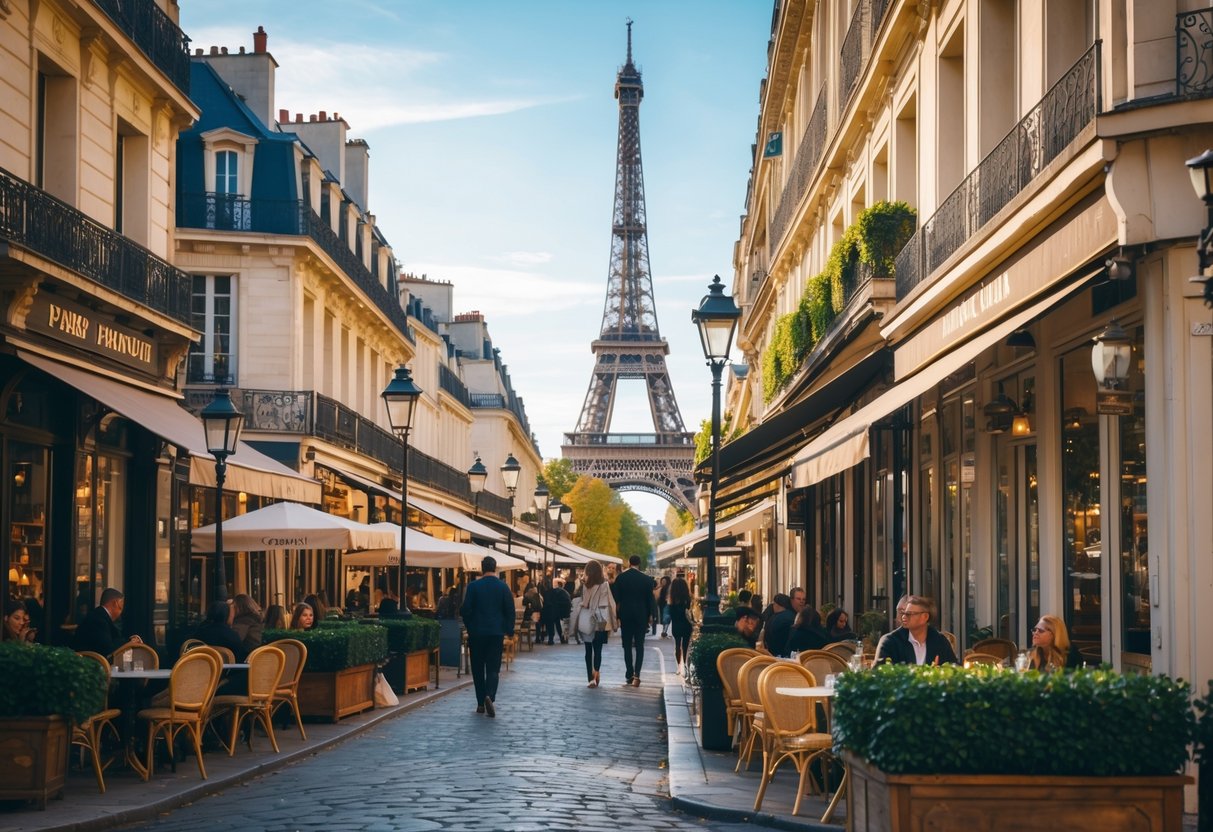
Paris lures millions each year with its legendary museums, iconic landmarks, and those irresistibly atmospheric streets. If you’re visiting for the first time, five to seven days gives you enough time to soak up the city’s neighborhoods, hit the main sights, and catch some local flavor. The city can feel huge and a little intimidating at first, but once you get a handle on the basics—how to get around, what’s expected, and a few practical tricks—it all feels much more manageable.
If you venture past the obvious monuments, Paris reveals its personality in the details. Roaming from the polished boulevards near the Champs-Élysées to the creative corners of Belleville, you’ll notice every neighborhood has its own quirks. Booking tickets for big attractions ahead of time really helps—otherwise, you could lose hours just waiting in line, especially when the city’s packed.
It helps to mix some planning with a willingness to get lost. Picking up a few French phrases, getting the hang of café customs, and keeping an eye on your stuff in busy places goes a long way. Paris is built for walking, and the metro will get you just about anywhere, but expect to rack up some steps on those old cobblestone streets.
Key Takeaways
- Five to seven days lets you explore Paris’s top sights and unique neighborhoods
- Buy tickets for museums and major sites online to skip the worst lines
- Knowing basic French greetings and customs makes city life smoother and friendlier
Key Tips for Travelling to Paris
Paris treats visitors well if they arrive with a bit of local know-how. If you know when to visit, how to ride the metro, what to wear, and how to say a few words in French, your trip will feel less overwhelming and a lot more fun.
Choosing the Best Time to Visit Paris
Spring (April to June) and fall (September to November) are honestly the sweet spots—mild weather, manageable crowds, and a city that feels alive but not overrun. Temperatures usually hover between 50-70°F, so you can wander comfortably and linger at outdoor cafés.
Summer brings long days and a lively buzz, but the crowds swell and prices jump. August is a bit strange: many Parisians leave, so some local spots shut down, but the touristy areas stay busy. Winter (December to February) is quieter and cheaper, with festive lights and markets, but you’ll want to bundle up—think 35-45°F and plenty of rain. An umbrella is always a good idea, no matter the season.
If you can, skip the first week of May. French holidays pile up, so a lot of places close and the city gets jammed.
How to Get Around the City Efficiently
The Paris Metro covers almost everywhere you’d want to go, with 16 lines and trains running from early morning until after midnight. A single ride costs about €2.10, but a carnet (10-ticket pack) saves you money if you’re riding a lot.
Apps like Google Maps or Bonjour RATP make it easy to plan your route. If you’re in town for a few days, grab a Navigo Easy card and reload as needed. Metro stops are everywhere—rarely more than a few blocks away—so you’ll rarely be far from a train.
Honestly, walking is the best way to get to know Paris. Most of the central neighborhoods are a 15–20 minute stroll apart. Wear good shoes—Parisian sidewalks can be hard on your feet.
For a change, try Vélib’ Metropole bikes (including electric ones for those hills in Montmartre). The first 30 minutes are free, then you pay by the minute. Taxis and Uber work, but traffic can make them slow and expensive during rush hour.
What to Wear in Paris and Local Etiquette
Parisians love their neutrals—think black, navy, gray, beige—and prefer tailored looks to anything too sporty. Sneakers are totally fine for walking, but gym clothes, baseball caps, or shorts (unless you’re actually working out) stand out. Forget the “Emily in Paris” wardrobe; real Parisian style is much more low-key.
Jeans with a sharp shirt, a blazer, or a simple sweater work for most occasions. Women often go for a dress or dark jeans with boots. A scarf isn’t just practical; it’s a Parisian staple. People care more about quality than having a ton of options.
Always greet shopkeepers and restaurant staff with a “bonjour” when you walk in and an “au revoir” when you leave. It’s a small gesture but goes a long way. Try to keep your voice down in public—loud conversations attract stares.
You don’t need to tip since service is included, but rounding up or leaving a bit of change for good service is appreciated.
Essential French Phrases and Cultural Courtesies
Even a few French words show respect and usually lead to warmer interactions. Jumping straight into English can come off as rude.
Some handy phrases:
- Bonjour (bohn-zhoor) – Hello/Good day
- Bonsoir (bohn-swahr) – Good evening
- Merci (mehr-see) – Thank you
- S’il vous plaît (seel voo play) – Please
- Excusez-moi (ex-koo-zay mwah) – Excuse me
- Parlez-vous anglais? (par-lay voo ahn-glay) – Do you speak English?
- L’addition, s’il vous plaît (lah-dee-see-ohn) – The check, please
- Où sont les toilettes? (oo sohn lay twah-let) – Where are the bathrooms?
Most Parisians speak some English, especially around tourist spots. Start with a French greeting and then ask, “Parlez-vous anglais?” before switching to English—people appreciate the effort.
“Paris syndrome” is a real thing: sometimes the city doesn’t match the fantasy. There are crowds, litter, and the occasional grumpy local. If you approach Paris as a real, working city—not a movie set—you’ll have a much better time.
Unmissable Sights and Iconic Parisian Experiences

Paris is packed with must-see landmarks, historic neighborhoods, and quirky gems. The city’s layout makes it pretty easy to mix the big-name attractions with local discoveries, especially if you plan ahead.
Eiffel Tower, Louvre Museum, and Arc de Triomphe
The Eiffel Tower is the city’s star. You can take stairs or an elevator to the first and second levels, but only the elevator goes all the way to the top. Stairs are cheaper and the line moves faster. Book your tickets about two months ahead if you’re visiting during busy times—otherwise, waits can drag on for hours.
The Louvre is huge—actually the world’s largest art museum. Once a royal palace, it now holds millions of pieces, including the Mona Lisa, Venus de Milo, and Winged Victory. You can hit the highlights in a couple of hours, but if you’re into ancient Egypt or Napoleon’s old digs, plan to linger.
The Arc de Triomphe anchors the Champs-Élysées and serves up panoramic views from its terrace. From up there, you’ll see the city spread out—Louvre in one direction, La Défense in another, and the Eiffel Tower peeking above the roofs. If you hate lines, buy skip-the-line tickets.
Exploring Historic Neighborhoods: Montmartre and Le Marais
Montmartre sits up on a hill and still feels like a village. Sacré-Cœur is the main draw, especially at sunset. The area’s full of winding streets, artists’ studios, tiny cafés, and the famous Moulin Rouge. Don’t miss the Wall of Love—it’s a sweet spot for photos.
Le Marais, over on the Right Bank, blends old stone mansions with hip shops and art galleries. You’ll find museums, bustling cafés, and the Pompidou Centre with its wild inside-out design. The food scene here is a mix of classic Jewish bakeries and modern bistros. Both neighborhoods are best explored on foot—give yourself time to stumble into little shops and hidden corners.
Crafting an Effective Paris Itinerary
Two to four days covers the main sights, but if you’re staying longer, add some day trips and lesser-known places to your list.
Sample 3-Day Paris Schedule:
- Day 1: Eiffel Tower, Arc de Triomphe, Champs-Élysées
- Day 2: Louvre Museum, Île de la Cité, Notre-Dame Cathedral, Sainte-Chapelle
- Day 3: Montmartre, Sacré-Cœur, Musée d’Orsay
Notre-Dame Cathedral finally reopened in December 2024 after that devastating fire. You can book a free time slot online or just join the line. The towers require a separate ticket and reward you with some of the best views in Paris.
Musée d’Orsay, right across the Seine from the Louvre, is a treasure for Impressionist and Post-Impressionist art lovers and sits inside a gorgeous old train station. Montparnasse Tower is another spot for city views, and the lines are usually much shorter than at the Eiffel Tower.
Day Trips and Lesser-Known Paris Attractions
Versailles tops the list for day trips—just a half-hour train ride away. The Hall of Mirrors, royal apartments, and sprawling gardens are worth several hours. If you’re up for a longer adventure, Mont Saint-Michel makes a dramatic getaway, rising out of the tidal flats about 3.5 hours from Paris by car or group tour.
Back in Paris, the Catacombs wind beneath the city, holding the bones of six million Parisians. Luxembourg Gardens offer a green break from sightseeing. Canal Saint-Martin is a favorite hangout for locals, with leafy paths and iron footbridges. The Shakespeare and Company bookstore, just across from Notre-Dame, has been a literary haunt since 1951. The Rodin Museum’s sculpture garden is a quiet spot for art and fresh air. These places add variety and give you a breather from the crowds.
Frequently Asked Questions
First-time visitors to Paris usually have questions about the top sights, how to get around, where to stay, and what’s up with French dining customs. Here are a few practical answers to help you get ready for a smoother trip.
What are the must-see attractions for a first-time visitor to Paris?
The Eiffel Tower is the big one—its observation decks have some of the best views in town. Definitely book tickets online to dodge the lines.
The Louvre is packed with art, from the Mona Lisa to the Venus de Milo. Most people need at least three or four hours to see the highlights, but you could easily spend a day.
Notre-Dame is still a major stop, even after the 2019 fire. You can admire the exterior and hang out in the area, and Sainte-Chapelle nearby is famous for its stained glass that fills the place with color.
Sacré-Cœur sits at the top of Montmartre and gives you sweeping city views. Entry is free, and the neighborhood is full of charming streets and cafés.
The Arc de Triomphe stands at the heart of Place Charles de Gaulle and honors French victories. Climb to the top for a classic view down the Champs-Élysées.
A Seine River cruise is a fun way to see a bunch of landmarks from a new angle. Boats run all day and into the evening, so you can pick your vibe.
How does one navigate the public transportation system in Paris?
The Paris Metro has 16 lines that reach pretty much every corner of the city. Trains come often, starting early in the morning and running until about 1:00 AM on weekdays, stretching to 2:00 AM on weekends.
If you want a reusable ticket, grab a Navigo Easy Card. You can buy one at any metro station and top it up for single rides or a 10-pack, whatever suits your plans.
The Paris Visite pass is handy if you’re planning to ride a lot. It gives you unlimited travel on metro, buses, RER trains, and even covers trips to the airports or Versailles for 1, 2, 3, or 5 days straight.
Buses move slower than the metro but let you actually see the city as you go. You’ll find route maps at every stop, and digital boards show when the next bus will show up.
The RER trains link Paris to the suburbs and airports. For example, Line B takes you from Charles de Gaulle Airport to central Paris in about 45 minutes, usually for around 10 euros.
Are there any recommended neighborhoods for tourists to stay in while visiting Paris?
Le Marais sits right in the middle of things, with old buildings, cool shops, and plenty of food options. It’s perfect if you want to walk to most sights and get a real feel for Parisian life.
Saint-Germain-des-Prés has that classic Paris vibe—think bookshops, art galleries, and stylish cafés. It’s a good pick if you’re after a bit of elegance and a cultured atmosphere.
The 7th arrondissement is close to the Eiffel Tower and has quieter, residential streets. Lots of families like it here for the safety, parks, and the fact that you’re near big attractions but not in the thick of it.
Montmartre feels artsy and a bit bohemian, with sloping streets and sweeping views from the hill. You’ll need to climb stairs or take the funicular to reach Sacré-Cœur, but the neighborhood’s charm is worth it.
The 1st arrondissement puts you steps from the Louvre, Tuileries Garden, and high-end shops. If it’s your first time in Paris and you want everything close by, this area makes things easy.
What are the best practices for dining etiquette in Parisian restaurants?
Always say “bonjour” to the staff when you walk in and wait for them to seat you—don’t just pick a table. It’s a small thing, but it goes a long way in Paris.
Locals usually have lunch between noon and 2 PM, and dinner doesn’t really start until 7:30 or 8 PM. Arriving at these times means you’ll get the full menu and the kitchen’s attention.
Meals here aren’t rushed. Expect dinner to last at least an hour or two. You’ll need to ask for the check; servers won’t bring it until you do.
To get the bill, catch your server’s eye and ask, “l’addition, s’il vous plaît.” They won’t bring it unless you ask, since that would feel like they’re pushing you out the door.
Dress codes lean toward neat and presentable, even in casual spots. For fancier places, business casual is the norm—so probably skip the shorts and sneakers.
How should tourists handle tipping for services in Paris?
Restaurant bills already include a service charge. If you see “service compris” on the bill, it means they’ve added about 15% for service.
If you feel like it, leave a euro or two extra for great service. It’s not required, but servers do appreciate the gesture.
At cafés, just round up to the nearest euro when you pay. If your coffee is 2.50 euros, leaving 3 euros is just fine.
For taxis, round up the fare by a euro or two. If your ride comes to 18 euros, paying 20 is standard.
Hotel staff like porters or bellhops usually get a euro or two per bag for helping with your luggage.
What are the language considerations for English-speaking travelers in Paris?
You’ll find that English pops up pretty often in touristy spots, hotels, and at the big attractions. Museum staff, people at tourist information desks, and servers at popular restaurants usually know at least some English.
Picking up a few basic French phrases really makes interactions smoother. Even just saying “bonjour” (hello), “merci” (thank you), “s’il vous plaît” (please), or “excusez-moi” (excuse me) goes a long way. It shows you care enough to try.
Most Parisians notice and appreciate when visitors attempt a bit of French, even if your accent’s not perfect. If you start out in French before switching to English, people tend to respond more warmly—it’s just a little thing, but it matters.
The Google Translate app is a lifesaver for menus, signs, or directions, especially outside the main tourist drag. Its camera feature is pretty handy—just point your phone at something in French and get an instant translation.
Once you wander into neighborhoods away from the big sights, you’ll probably run into fewer English speakers. In those spots, it helps to know some French or keep a translation app ready. Otherwise, you might find yourself playing a bit of charades.
Comments