
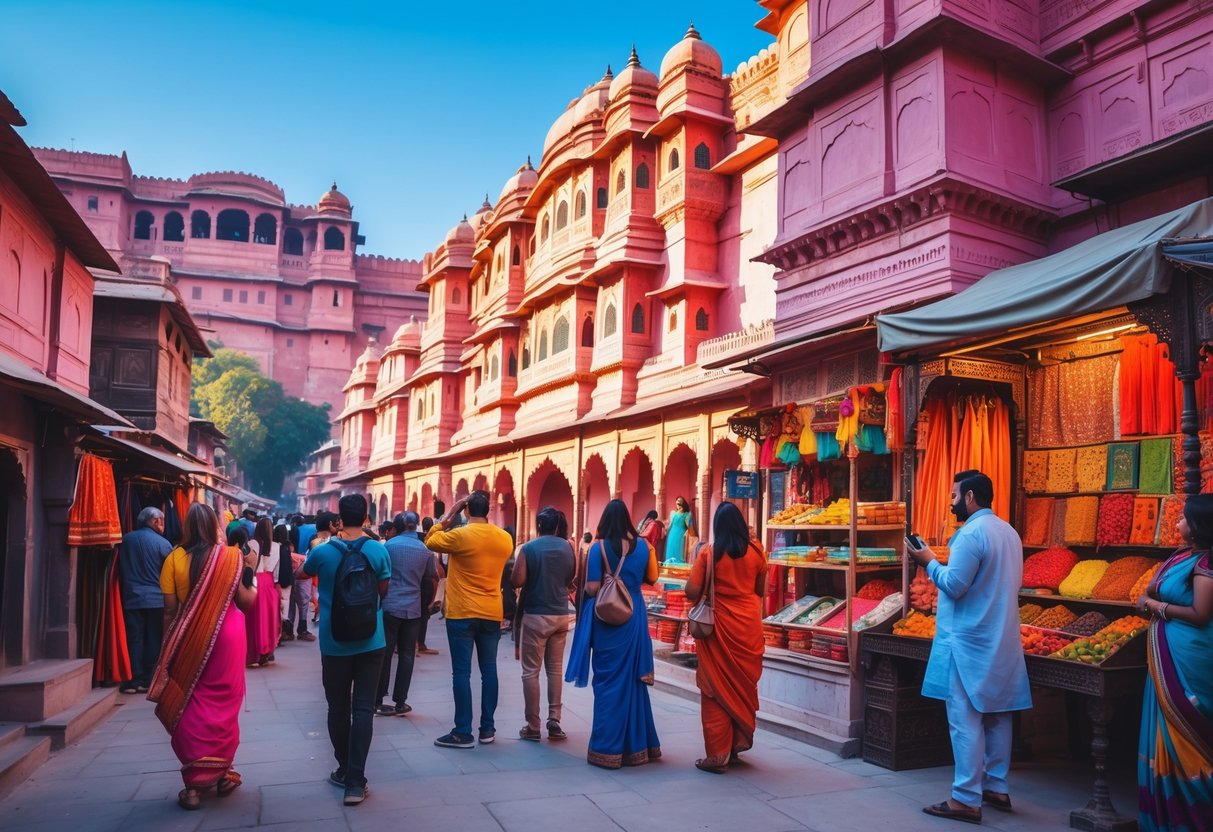
Jaipur, Rajasthan’s capital, lures travelers with its pink-hued buildings, opulent palaces, and layers of history. The city’s a lively blend of ancient monuments, bustling bazaars, and a food scene that’s pure old-school India. Whether you’re here for royal architecture or a hunt for handmade treasures, Jaipur’s got something for just about everyone.
Most people need three days to hit Jaipur’s big sights: the City Palace, Hawa Mahal, Amber Fort, and Jantar Mantar. Set in northern India’s Golden Triangle, the city pulses with art, science, and Rajasthani tradition. You can dive into museums packed with royal relics, climb up to hilltop forts for sweeping views, or lose yourself in bazaars overflowing with textiles and jewelry.
Getting around Jaipur isn’t complicated. App-based cabs, auto-rickshaws, and local tour operators are everywhere. The weather’s at its best from October to March—cool enough for exploring, but not chilly. If you want to make your trip memorable, mix the must-see landmarks with local eats and a little market wandering. That’s when Jaipur really comes alive.
Key Takeaways
- You’ll want about three days to see Jaipur’s main palaces, forts, and cultural spots
- The city stands out for its architecture, museums, colorful bazaars, and classic Rajasthani food
- October to March is prime time for Jaipur’s outdoor sights and old-world charm
Essential Planning for Your Jaipur Trip

If you want your Jaipur trip to go smoothly, it helps to know the best time to visit, how you’ll get there, and how you’ll get around. Weather can really shape your experience, and thankfully, getting to Rajasthan’s capital is a breeze thanks to all the travel options.
Best Time to Visit Jaipur
November to February is the sweet spot for Jaipur visits. Temperatures hover between 50°F and 77°F—warm days, cool nights, and plenty of sun for sightseeing.
March through June, though, brings searing heat. We’re talking over 104°F. Then July to September is monsoon season, with sticky air and the occasional downpour. Fewer tourists show up during these months, and hotel rates drop, but you’ll need to plan for the weather.
Winter’s also festival season. The Jaipur Literature Festival livens up January, and Holi comes in March—right before the heat ramps up.
If you’re coming in winter, book your hotel a couple months ahead. Summer and monsoon trips are cheaper, but you’ll need to keep the weather in mind.
How to Reach Jaipur
Jaipur International Airport links the city to major Indian metros like Delhi, Mumbai, and Bangalore. Flights also come in from Dubai, Sharjah, and Bangkok. The airport’s about 8 miles from downtown, and you can grab a taxi or book an app-based ride easily.
Trains connect Jaipur to Delhi in four to five hours. There are plenty of daily options, with Jaipur Junction as the main station.
If you’re driving or taking a bus, the Delhi-Jaipur highway covers 165 miles—expect about five hours on the road. State and private buses run regularly. Lots of people make Jaipur a stop on the classic Golden Triangle route with Delhi and Agra.
Getting Around the City
For short hops, auto-rickshaws are everywhere. They have meters, but most drivers prefer to settle on a price upfront. Always agree before you ride.
Uber and Ola both work well in Jaipur, offering clear pricing and air-conditioning. Local buses cover fixed routes, though they can get packed.
Hiring a car with a driver costs around 2,000–3,000 rupees per day—pretty handy if you’re cramming in several forts or palaces. If you’re up for it, renting a bike is a fun way to explore the old city at your own pace.
The Pink Line metro connects some key areas, but coverage is limited. Most tourist sites will still require a rickshaw or cab from the nearest station.
Top Places to Visit in Jaipur

Jaipur’s iconic sights are its three historic forts perched in the Aravalli Hills. Each one’s got its own style and stories, plus killer views over the Pink City. These massive forts show off the military power and royal legacies of Rajasthan’s rulers.
Amer Fort and Amber Palace
Amer Fort rises above the city, about 11 km from Jaipur, on a ridge of the Aravalli. Raja Man Singh I started it back in 1592, then Mirza Raja Jai Singh finished it off. The fort’s made of red and yellow sandstone with touches of white marble.
You’ll find four main courtyards, featuring the Diwan-e-Aam, Diwan-e-Khas, and the dazzling Sheesh Mahal (Mirror Palace). Enter through Suraj Pol or Chand Pol—both lead to the main Jaleb Chowk courtyard. From up here, you get a sweeping view of Maota Lake and the hills around.
Most visitors either ride elephants up to the gate or take a car up the winding road. Give yourself three to four hours to see everything. There’s also a light and sound show in the evening that brings the fort’s history to life.
Timings: 7:00 AM to 9:00 PM
Entry Fee: ₹100 for Indians, ₹500 for foreigners
Jaigarh Fort
Jaigarh Fort stands tall on Cheel ka Teela (Hill of Eagles), 500 feet above sea level. Maharaja Sawai Man Singh II built it in 1726 to guard Amber Fort from attacks. You’ll notice a mix of Indo-Persian design, with thick walls and intricate lattice windows.
The fort’s claim to fame? The Jaivana Cannon—the world’s largest wheeled cannon, which apparently fired just once. Inside, you’ll find a watchtower, a water heritage walk, Shubhat Niwas (the warriors’ hall), and an armory packed with Rajput-era weapons.
There are several temples here too: Kal Bhairav, Ram Harihar, Lalit Mandir, Aram Mandir, and Vilas Mandir. From the ramparts, you get clear views of Amber Fort and the green countryside below.
Timings: 9:00 AM to 6:30 PM
Entry Fee: Starting from ₹75 for Indians, ₹100 for foreigners
Nahargarh Fort
Nahargarh Fort crowns the Aravalli ridge, built by Maharaja Sawai Jai Singh II in 1734 to defend Amber Palace. It doubled as a royal retreat and has watched over Jaipur for centuries. The Indo-European architecture draws plenty of curious visitors.
Inside, you’ll find Madhavendra Bhawan—nine identical apartments made for the king’s wives, built by Sawai Madho Singh. There’s also a temple for Rathore prince Nahar Singh Bhomia, plus a wax museum and a Sheesh Mahal.
The fort’s ramparts offer some of the best views of Jaipur and Jal Mahal. Honestly, it’s a favorite spot for watching the sunset over the city.
Timings: 10:00 AM to 10:00 PM
Entry Fee: ₹50 for Indians, ₹200 for foreigners
Palaces, Museums, and Temples
Jaipur’s got a treasure trove of architecture—palaces with hundreds of windows, a palace floating on a lake, ancient observatories, and temples thrumming with daily prayers. If you’re into science, royalty, or spirituality, there’s a site here that’ll grab you.
Hawa Mahal
Hawa Mahal is probably Jaipur’s most photographed building. Built in 1799 by Maharaja Sawai Pratap Singh, this five-story palace has 953 tiny jharokha windows. The pink sandstone facade was designed to look like Lord Krishna’s crown.
Back in the day, royal women watched street life and festivals from behind these windows, hidden from view. The honeycomb design channels breezes through the palace, so it stays surprisingly cool even when Jaipur bakes.
Visitors enter from the back, then wind through narrow passages up to the higher floors. The upper stories have some of the best views of the Old City. Early morning’s when the facade really glows—photographers love it. The inside isn’t as flashy as the outside, but you’ll get a sense of the clever engineering at work.
Jal Mahal
Jal Mahal floats in the middle of Man Sagar Lake, looking almost like a mirage. Built by Maharaja Madho Singh I in the 1700s, it served as a royal summer getaway and hunting lodge. The palace blends Rajput and Mughal styles, topped with domed pavilions.
There are five stories, but when the lake’s full, four of them sit underwater. This gives the palace a surreal look from the shoreline. You can’t go inside, but the lakeside promenade is perfect for photos or just soaking up the view.
Sunrise and sunset are magic hours for pictures, with the Aravalli hills as a backdrop. Sometimes boats run across the lake, depending on the season. Vendors along the walkway sell snacks and handicrafts. It’s a peaceful break from Jaipur’s usual chaos.
Jantar Mantar
Jantar Mantar, a UNESCO World Heritage Site, is packed with 19 astronomical instruments built in 1734. Maharaja Sawai Jai Singh II designed the observatory to measure time, track celestial bodies, and predict eclipses—no fancy tech needed.
The Samrat Yantra, the world’s largest stone sundial, stands 27 meters tall and can tell the time within two seconds. You’ll also spot the Jai Prakash Yantra for mapping the sky, and the Rama Yantra for measuring star positions.
Key instruments to check out:
- Samrat Yantra: This giant sundial is the main event for timekeeping
- Jai Prakash Yantra: Hemispheres for charting the heavens
- Rama Yantra: Cylinders for measuring the altitude of stars
- Narivalaya: Twin sundials for more time measurements
The observatory shows off just how advanced Indian science was in the 18th century. It’s right by the City Palace, and you’ll see everyone from students to tourists wandering around. The guides do a good job explaining how the instruments work, so even kids get something out of it.
Govind Dev Ji Temple
Govind Dev Ji Temple is one of Jaipur’s most beloved spiritual spots. Tucked inside the City Palace complex, it’s dedicated to Lord Krishna. The idol, believed by many to closely resemble Krishna himself, was brought here from Vrindavan in 1735.
Worshippers gather for aartis—seven ceremonies happen each day. Morning and evening aartis get especially lively, with singing and prayers filling the hall.
The temple’s design is simple, keeping the focus on devotion. No photos allowed inside the main prayer space. Visitors should dress modestly and leave shoes outside. When aarti’s happening, the place buzzes with music and chanting.
Other spiritual and cultural highlights include the white marble Birla Mandir at Moti Dungri Hill, Galtaji Temple (Monkey Temple) with natural water pools, Albert Hall Museum (don’t miss the Egyptian mummy), Anokhi Museum of Hand Printing for textile fans, and Panna Meena Ka Kund—a 16th-century stepwell with geometric stairways near Amber Fort.
Gardens and Scenic Spots
Jaipur’s gardens really show off the city’s mix of Mughal and Rajput style—think terraced lawns, fountains, and pavilions with hand-painted murals. These places sit against the Aravalli Hills, so you get a dose of traditional architecture surrounded by green, with some great views thrown in.
Sisodia Rani Ka Bagh
Maharaja Sawai Jai Singh built this garden in the 18th century for his second wife, a princess from Udaipur. It’s just a few kilometers off the Jaipur-Agra highway and sprawls over several terraced levels.
The garden follows Mughal design principles, with water channels weaving through the grounds. Fountains line the walkways, and the flower beds are packed with seasonal blooms and trees. The painted pavilions show murals of Radha and Krishna—those are worth lingering over.
A small palace sits above the terraces, showing off classic Mughal touches in its arches and decorations. The garden opens daily from 8 am to 6 pm, and entry costs ₹30 per person.
Vidyadhar Garden
This garden honors Vidyadhar Bhattacharya, the architect who actually planned Jaipur’s original layout. You’ll find it at Ghat ki Guni, not far from Sisodia Gardens, and it reflects ideas from the ancient Shilpa Shastra texts.
The pavilion walls carry patterns inspired by Hindu mythology, while the fountains and flower beds echo Mughal traditions. Since it’s tucked at the base of the Aravalli Hills, it’s a nice spot for bird watching.
Peacocks show up during the monsoon when the flowers are out, and in winter, you’ll spot migratory birds. Sunset is probably the best time to visit—the light on the hills is beautiful. The garden opens from 8 am to 5:30 pm, and there’s no entry fee.
Cultural Experiences in Jaipur
Jaipur’s culture comes alive in its food, performances, and village-style attractions that give you a real sense of Rajasthani heritage.
Rajasthani Cuisine
Rajasthani food is shaped by the region’s history and harsh climate, so you get bold flavors and some unique cooking. Dal baati churma is the most famous—baked wheat balls, lentil curry, and sweetened flour. If you’re up for spice, laal maas (red meat curry) is a must, and gatte ki sabzi (gram flour dumplings) shows off the region’s creativity.
On the street, you’ll find pyaaz kachori, mirchi vada, and ghewar—a sweet that looks like a honeycomb. Johari Bazaar and Bapu Bazaar have plenty of food stalls, so you can snack as you shop. Restaurants often serve thalis with a bit of everything, which is a good way to taste the variety.
Masala chai and lassi are the go-to drinks. Many places still use clay ovens and old-school pots, which really brings out the flavors.
Traditional Performances
Jaipur’s performances include folk dances, music, and puppet shows that go way back. Ghoomar (danced by women in swirling skirts) and Kalbelia (the snake-charmer dance UNESCO recognizes) highlight Rajasthan’s dance scene. You’ll catch these at hotels, cultural centers, and during festivals.
Musicians play instruments like the sarangi, kamaycha, and dholak at evening shows. Puppet shows, called Kathputli, use wooden puppets to tell local legends and history.
The Sound and Light Show at Amer Fort tells Jaipur’s story with narration and special effects. Nahargarh Fort also hosts exhibitions and performances, plus you get sweeping city views.
Chokhi Dhani
Chokhi Dhani recreates a Rajasthani village about 20 kilometers from downtown. The place covers several acres, with mud huts, village squares, and activity zones that let you see rural Rajasthan up close.
Artisans show off pottery, painting, and textile work. You can try camel or elephant rides, play traditional games, or get your fortune told. Folk performances pop up all evening on different stages.
The main draw is the unlimited Rajasthani thali dinner, served the old-fashioned way—on the ground, with food cooked using recipes passed down for generations. Chokhi Dhani runs all year and stays open late, so you can visit after a day of sightseeing.
Shopping in Jaipur’s Vibrant Bazaars
Jaipur’s markets are lively and packed with handcrafted jewelry, bright textiles, and all kinds of local finds. The bazaars open daily with long hours, so you can wander at your own pace.
Johari Bazaar and Bapu Bazaar
Johari Bazaar is probably Jaipur’s most famous spot for gemstone jewelry and precious stones. It’s open from 10 AM to 11 PM, so there’s no rush. You’ll find everything from traditional necklaces to modern rings, usually at prices that don’t break the bank.
Bapu Bazaar, right in the old city, is the place for Jaipuri mojris—traditional leather shoes with detailed designs. It opens from 10:30 AM to 7:30 PM and also sells leather bags, belts, and accessories. There are plenty of textiles, quilts, and Rajasthani clothes too.
Both markets buzz with locals and tourists. Bargaining is part of the fun, so don’t be shy about negotiating.
Handicrafts and Souvenirs
Jaipur’s bazaars are full of traditional handicrafts that make great souvenirs. Blue pottery stands out with its colorful, intricate designs on jars, plates, and knick-knacks. Tripolia Bazaar is known for lac bangles—bright, detailed, and very Rajasthani.
You’ll spot wooden sculptures, marble pieces, and block-printed textiles in stalls around the city. Hand-embroidered fabrics with classic motifs come in all price ranges. Pick up small things like keychains or splurge on carved furniture and wall art.
Most handicraft vendors open from 10 AM to 7 PM, though some near tourist areas stay open later. Since quality can vary, it’s smart to check items closely before buying to make sure they’re the real deal.
Frequently Asked Questions
Planning a Jaipur trip? You’re probably wondering about what to see, the weather, food, and just how things work. Here’s a quick rundown of what most travelers want to know before they head to the Pink City.
What are the top attractions to visit in Jaipur?
Amber Fort is one of Jaipur’s most stunning sights, about 11 kilometers from the center. You can explore its grand courtyards and palaces—an impressive example of Rajput architecture.
The City Palace stands right in the heart of Jaipur, still part royal residence and part museum. Galleries, chambers, and lovely gardens give you a peek into the royal family’s world.
Hawa Mahal (the Palace of Winds) is famous for its 953 carved windows. Built in 1799, it’s a five-story landmark where you can climb up for city views.
Jantar Mantar has 19 astronomical instruments built by Sawai Jai Singh II in 1728. The observatory still works, showing off some clever 18th-century science.
Albert Hall Museum houses artifacts from all over India—sculptures, pottery, paintings. It’s a nice stop if you want to dive into Indian art and culture.
What is the best time of year to visit Jaipur for good weather?
November to February is hands-down the best time. The weather stays mild and perfect for sightseeing or just wandering outside.
Winter also brings big festivals like Pushkar Mela and Jaipur Literature Festival, so you get extra culture if you visit then.
Summer (April to June) gets brutally hot and humid, and the monsoon (June to September) can mess with your plans.
March and April mean cheaper flights and hotels, though it’s warmer. If you don’t mind the heat, you might score some deals.
Can you recommend some authentic Rajasthani cuisine restaurants in Jaipur?
Suvarna Mahal at Rambagh Palace serves classic Rajasthani dishes in a fancy setting—think Rajasthani Thali, Dal Baati Churma, and Dal Makhani.
Rajput Room is another good pick, with decor that feels local and a standout Laal Maas dish.
Street food vendors are everywhere and let you try real local flavors without spending much. Just remember to carry cash, since most don’t take cards.
Johari Bazaar has loads of food stalls and tiny restaurants serving the kind of food locals eat every day.
What are the options for traditional shopping in Jaipur?
Johari Bazaar is the main stop for jewelry and gemstones. Haggling is expected, so don’t hesitate to negotiate.
Tripolia Bazaar, Chandpole Bazaar, and Johari Bazaar all offer something different—textiles, handicrafts, clothes, and decorative stuff.
Most markets run all day into early evening. Vendors usually prefer cash, but bigger shops might accept cards.
Block-printed fabrics, blue pottery, and leather goods are everywhere. You’ll find both simple souvenirs and high-quality gifts.
How can a foreign tourist obtain a SIM card or mobile services in Jaipur?
You can buy a local SIM card from major Indian telecom providers in Jaipur. Bring your passport and visa—they’ll need both for registration.
Authorized mobile shops and carrier stores handle sales and activation. Usually, it takes a few hours to a day to get connected.
Make sure to bring photocopies of your passport and visa, plus a passport-size photo. Some providers ask for a local address—hotels can usually help with that.
Prepaid plans work best for short visits, with data packages for navigation, calls, and internet while you’re traveling.
What are the best areas or hotels to stay in for a first-time visitor to Jaipur?
If you want to make the most of your time, staying near City Palace and Hawa Mahal puts you right in the thick of Jaipur’s main sights. It’s honestly a relief not having to spend ages getting from one landmark to another.
The Rambagh Palace stands out if you’re after a taste of history with your luxury. It’s not just a hotel—it used to be a royal residence, and you can feel that old-world Rajasthani charm in the details everywhere.
Places just outside the old city walls usually have better deals, especially if you’re visiting when it’s less crowded. You can still get to the main attractions pretty easily with a rickshaw or cab, so you’re not missing out.
Budget travelers might lean toward guesthouses and smaller hotels in the heart of the old city. They’re basic but affordable, and for anyone watching their spending, that’s a big plus.
Comments